
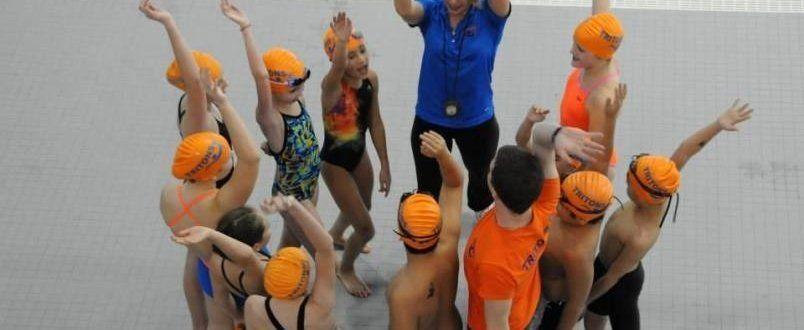
The hours of training, its intensity, specialization and technical training in all styles from a very young age are issues that concern parents and coaches and judge the future of children in the sport. Little Swimmers
How many hours of training should we undergo? the smallest of our swimmers?
How should they, what should they do technically and how intense should their training be?
How important it is to have them restful and pleasant during training, especially in this day and age when young children are loaded with a monster of activities, so that we can get the result we need after teaching a specific technique per style. Fatigue brings fatigue and fatigue brings indifference or difficulty in implementing the exercise! ZERO result!
When is the right time to ask them to leave other sports and specialize in swimming?
And now reaching the competitive stage if they are ready to accept physically and mentally the pressure and the changes that Junior Swimmers high sport requires...! Here if there is not the basic unit called technical training of the athlete from the initial structures, unfortunately the rejection of sports center is very close...!
Stars in swimming from an early age
On the one hand we have strong evidence that elite swimmers started training at a very young age. It's the reality! Michael Phelps, for example, started swimming at the age of 7 and was a world champion and world record holder at 15. By studying the results of other top swimmers we come up with a list of 20 superstars, 11 of whom started training at the age of 6 , 8 years old.
This early start to championships has created a trend in swimming that suggests swimmers begin intense training and specialize in swimming from a very young age. So we often hear about teams, with children under the age of 10, with multiple trainings a week and sometimes two trainings a day. Or we hear of very young children, especially in the boys and girls categories, setting two or three records in a year.
At this point, an important role is played by the clubs and the philosophy they follow and consequently the demands they create towards their coaches...!
Teenage swimming champions…
On the one hand, it is incredible because of the "fast track" that there are such spectacular results at such young ages, and on the other hand, research shows that these "wonderful" results do not translate into top moments when the athletes reach an older age. In fact, the exact opposite is the case.
In other words, we notice that only 10% of the athletes who reach the top at ages under 10, remain there at 17 to 18 years old. If we even take into account that the average age of athletes participating in the Olympic Games is about 23 years, that 70% of children up to the age of 13 have given up the sport and that specialization in swimming at very young ages leads in giving up the sport around the age of 14, we will find that there is a problem.
So this is where the real meaning and essence of a well-qualified coach comes into play!
The coach who will invest on the one hand in the essence and the real work plan of the structures-academies, which is nothing more than the correct transmission of the technique of ALL styles and on the other hand in the absolute psychology of the thinking and behavior of every athlete! In the sports environment, the adaptation and success of athletes depends on factors that mainly concern physical and technical elements, as those that are "projected" more. But there is also psychology, this "lady" is the main protagonist who is hardly visible but plays the most important role...!
The paradox of champions
Although our research evidence shows us otherwise, we continue to push young swimmers into very hard training. Why is this happening;
One reason is that we are influenced by Dan Coyle's rule in his book “The Talent Code”, according to which to become great you don't need talent but 10,000 hours of careful practice..!
Of course, the original research, the result of which is the previous rule, was about average people. In reality there are people who can become great with much less but also with much more hours of practice, that is, depending on the particular abilities of each one.
It seems after all that there are short cuts even to success itself.
But is this the rule?
The big dilemma
And here a dilemma arises. The data on swimming shows us that most elite swimmers started swimming early, and specialized early, on a path that led them to success.
However, the number of these athletes represents only 0.001% of the athletes competing worldwide. That is, there is a percentage of 99.999% competitive swimmers who are not at the top. Little Swimmers
In conclusion, the following question arises: should we train swimmers hard from a very young age, with endless measures, persistence in time per style, assuming that this is the only way they will manage to reach the top, or should we provide them with a balanced life in combination with technical training, the elements of which are repeatability, correction and reward, making them enjoy their sport and reach the peak of their physical ability with balance when they are of competitive age?
The answer is at the discretion of each coach.
The coach who is updated daily!
The qualified coach with studies and specialty!
Of the coach who under no circumstances should rely solely on his personal experience as a former athlete-champion and even Olympic champion.
The perfect food does not always require the perfect recipe that everyone can make and it tastes like everyone..! It is a complex of situations based on many sciences and not on one! Sciences that do not come out of anyone's sports experience but only from study, theories and endless research and evaluations...!"
Saltamanikas Nikolas
TEFAA graduate, swimming specialty
Class A swimming coach

No Comments